




At a recent U.S. Grains and BioProducts Council symposium in Japan, I addressed ethanol compatibility with existing infrastructure and vehicles. With comments I offered to the California Air Resources Board (CARB) regarding a similar issue—their E15 rollout plan—fresh in my mind, I kind of went off on a rant. How is there still an ethanol compatibility debate? Especially when it comes to blends like E10 and E15? In addition to studies by the Department of Energy and Environmental Protection Agency (EPA) to approve E15, doesn’t 45 years of E10 and 14 years of E15 real-world use trump anecdotal “evidence” and the smattering of rebutted higher blend “studies” featuring small numbers of engines hand-picked for their history of ethanol sensitivity? And unless your station has single-walled fiberglass tanks installed during the Bush administration (the dad, not the kid), it’s almost certainly compatible with any blend of gas and ethanol. It seems the only reason compatibility is still in question is…I can’t think of one.
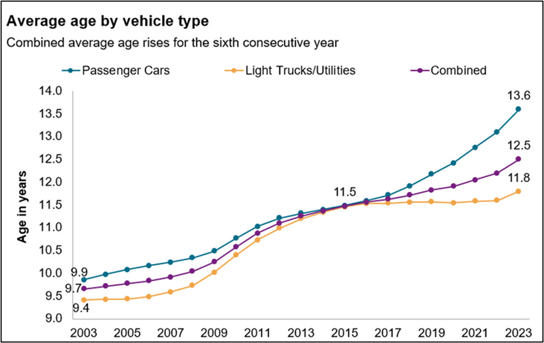 I offered the chart to address the ethanol ghost stories. Despite dire predictions of vehicle destruction from increased U.S. ethanol use, not only has there not been increased vehicle damage, since 2000 the U.S. uses 700% more ethanol every year, and average vehicle life has increased 130%—a full three years.
A Japanese auto journalist approached me after my presentation and said he was also wary of offering facts to persuade people whose opinions weren’t formed using facts. And he believed most people think ethanol blends aren’t compatible because automakers said they weren’t. “But” he said, “they’ve never had to prove it. Ever.”
That reminded me of when E15 became the target blend for EPA approval primarily because Underwriters Laboratories’ UL87 listing for gasoline/ethanol dispensers was full of phrases like “gasoline with up to 15 percent ethanol” and “ethanol does not exceed 15 percent.” Even UL87A, the E85 dispenser standard created only a couple years earlier, said it covered “fuel blends above 15 percent.” If EPA approved E15, we reasoned, UL87 says retailers could sell it immediately using existing equipment!
But as E15 rumors became reality, UL suddenly started publicly saying UL87, with 15% referenced throughout, actually meant 10% (E10 wasn’t mentioned anywhere). We pushed back, demanding they produce any data they used to support their change.
UL never produced any, and eventually said they’d support authorities who permit UL87 legacy system dispensers to be used with a maximum of 15% ethanol. They also said, “UL determined that there is no significant incremental risk of damage between E10 and fuels with a maximum of 15 percent ethanol.”
Two trillion gallons and 50 trillion miles on ethanol—what’s the question again?